How to Quickly Find Real Academic Citations Using AI Consensus
by Lucas Meyer••5 min read
AI tools have changed the way students, teachers, and researchers look for school information. It used to take a long time to find useful information on Google Scholar, academic databases, or journal websites. Many people thought it was slow and annoying.
A lot of people use AI to speed up their research. They say that these tools will help you get answers and find things out more quickly. But this ease comes with a lot of risk.
Some AI chatbots can make up fake journal references, author names, and paper titles that look like they are real. Most of the time, these references aren't real. They might sound smart and convincing, but they aren't.
Using fake academic citations can be bad. Students may be punished at school by getting lower grades or other punishments. It can make teachers and researchers less sure of what they do and less trustworthy. AI Consensus should be able to fix this problem.
AI Consensus helps people find real research papers. You can trust the sources for the citations.
Why ChatGPT Can't Help You Look for Research Papers
A lot of students ask a simple question: Why not just tell ChatGPT to look for research papers?
The answer has to do with how AI language models work in general.
What do AI hallucinations mean?
When a computer makes up information that sounds true but isn't, that's called AI hallucination. A chatbot might get a lot of things wrong when asked to list academic papers.
It might give papers names that sound like they are from science. It could mix up real authors with fake journals. It could also make up years when things were published that didn't happen.
These systems can talk in a way that is clear and sounds sure of themselves. They don't know how to check if a paper is in an academic database. This is why they don't look into the facts.
This rule is very important for writing in school. You could use a paper that is hard to find as a source. This might make your work look less real.
What does it mean to agree with AI?
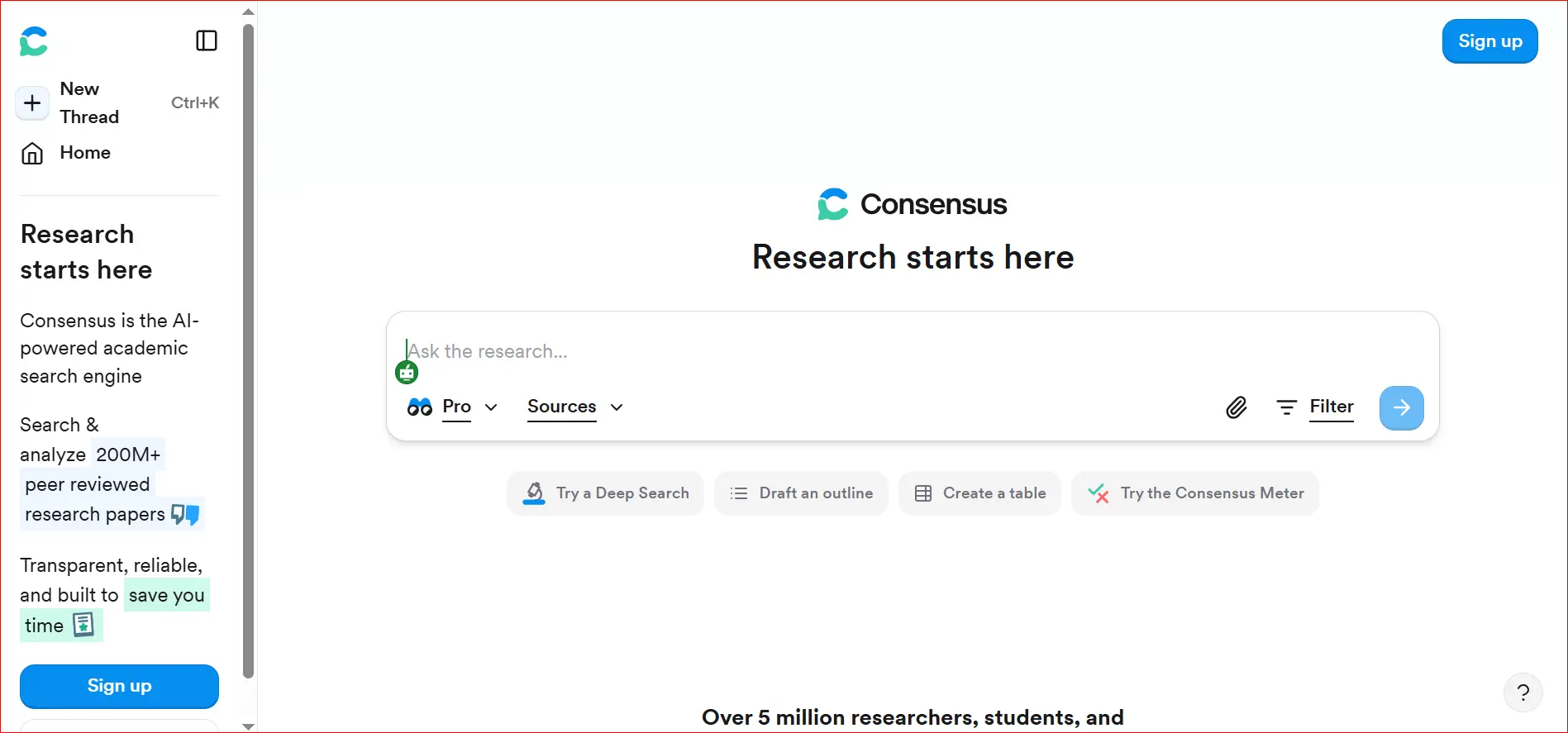
Consensus is an AI-powered academic search engine that was made to help with problems with citation accuracy.
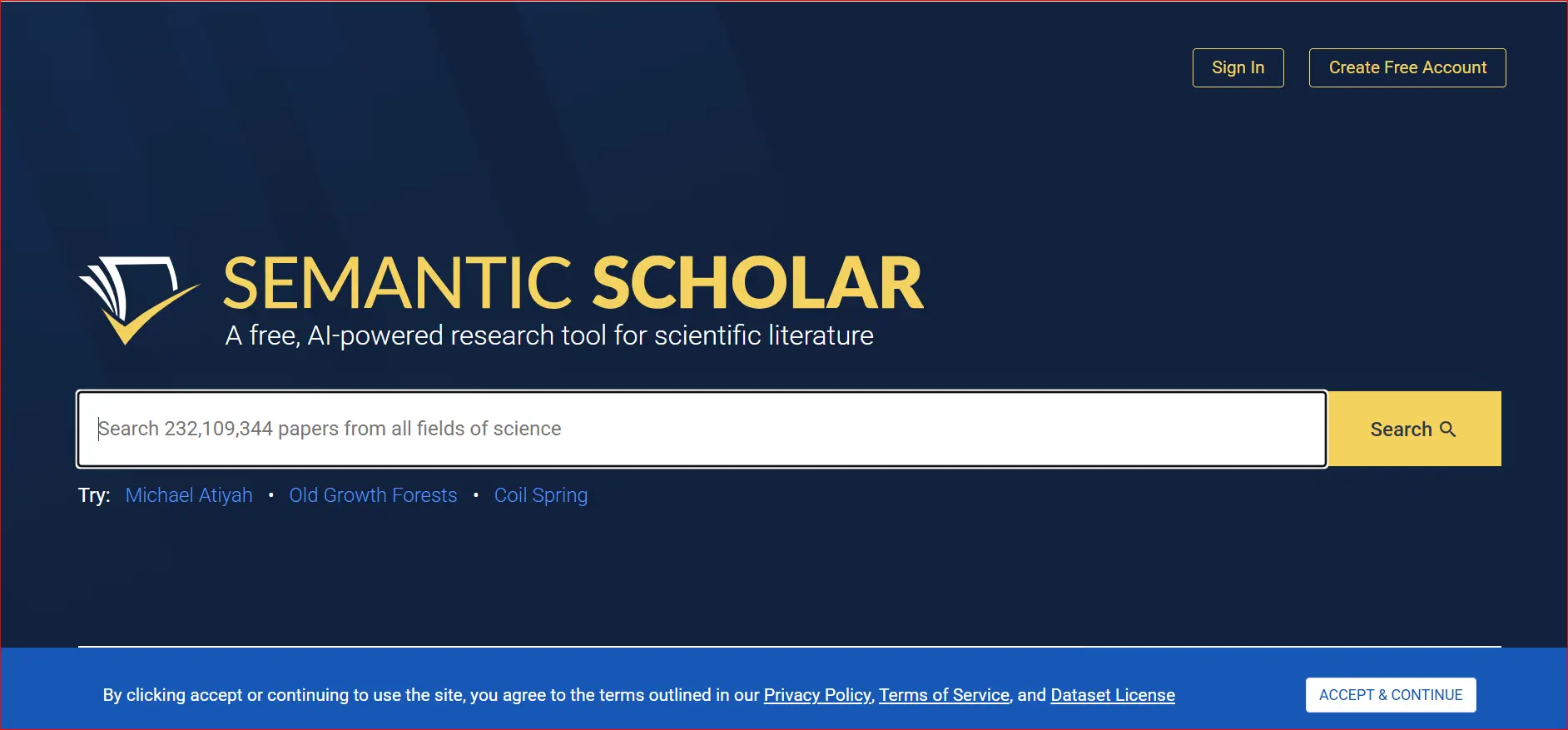
Semantic Scholar is a search engine for researchers.
Consensus is powered by Semantic Scholar, which is one of the most reliable academic databases in the world. Instead of making things up or guessing, consensus does a lot of things that are clear.
It looks for research papers that other people have read and talked about. It gets information from research that has already been published. Clicking on the citation links will take you to the original sources.
This is what makes Consensus different from other AI chatbots that can do a lot of things. It doesn't look into anything. It gets real information about schools.
For example, looking into how social media affects teens' sleep
You can see a real-life example of AI Consensus if you want to learn more about it.
Step 1: Write down a question that is clear and scientific.
It's best to have clear scientific questions so that everyone can agree on the answer. The best questions are ones that can be answered with a "yes" or "no," or that ask what happens when something happens.
For example:
Do teens who use social media sleep less well?
When you ask a question like this, consensus can look at the results of different studies to see if there are any trends.
Step 2: Read the summary that was written.
When you send in your question, Consensus puts all the answers in one place. To help me write this summary, I read a lot of scholarly papers.
It puts together the results of many studies. It shows you whether most researchers agree or disagree. It shows the main points of the study.
Instead of just one paper, users can see what most scientists agree on. This is important for being truthful at school.
The results could show, for example, that people sleep less, take longer to fall asleep, or that there is a connection between how much time people spend on screens and how much melatonin they have. You won't have to read by hand, which will save you a lot of time.
Step 3: Click on "Citations" to see the papers that were used.
This is the most important thing to do.
There are sources that support every claim made in Consensus. You can read real papers that have been published by clicking on these links. People can read the research by clicking on a citation.
They can learn who wrote it, what journal it was published in, and when it came out. They can check to see if the study is real. This method keeps AI from making things up and lets people check sources on their own.
Advanced Research Features: Filtering and Sorting
Consensus also has tools that can help you get what you need for school.
- Reading studies that have been done recently or that a lot of people are talking about
Not all papers for school have the same effect. Some studies are more recent than others, and some are used more often.
Users can find important Consensus studies by looking at how many times each paper has been used as a source. People can also find more recent studies by sorting the results by when they were published. You can only read articles that other experts have read.
These features are useful for writing essays, dissertations, literature reviews, and other types of writing where the quality is more important than the amount.
Why Consensus Is Safer Than Other AI Tools
There are many reasons why consensus is better than AI chatbots in general.
All of the sources come from databases that experts have looked at. It's easy to find the original research when there are direct citation links. With this system, you can't talk to your friends. There are a lot of studies in this one place.
Consensus doesn't replace academic thinking; it just makes it easier for researchers to do their jobs.
Who should use AI Consensus?
A lot of people can use AI Consensus.
It can help college students write essays and theses. It helps people who are writing reviews of books. It helps teachers tell the truth. It can help reporters find out if scientific claims are true.
People who want to be honest and do the right thing in school can benefit from consensus.
Last Thoughts
People are changing how they look for academic information as AI becomes more common in schools and research.
You can do more in less time with AI tools. But they also make it easier for people to use quotes that aren't true or don't tell the whole story.
AI Consensus is different because it only looks at research that is based on facts and uses databases that have been checked. People can trust that the summaries are based on real papers that other experts have read.
To keep your academic integrity, you need to find a middle ground between being quick and being right. AI Consensus is a good way to find real academic papers and stay away from fake citations.
Author

Lucas Meyer
Developer & AI Tool Tester
Lucas makes small web apps and side projects with free AI coding tools. He looks at AI editors, local models, and coding helpers based on real development tasks, not demos. He focuses on free tiers and how easy they are to use.
Related Posts
Essential for Students in 2026: 20 Completely Free AI Learning Tools
20 Free AI Learning Resources Being a student in 2026 is harder than it has ever been. Students have a lot to do, like write good essays, learn difficult subjects quickly, give presentations, and finish difficult assignments, all with little time and
How to Summarize Long YouTube Videos for Free
People who want to learn on their own, like students and researchers, can find a lot of useful information on YouTube. YouTube has a lot of videos that can help you learn, like university lectures, how-to videos, and videos that can help you study fo
Is It Expensive to Convert Audio to Notes? 5 Best Free Alternatives to Turbolearn in 2026
5 Best Free Turbolearn Alternatives in 2026 Students have always had trouble taking notes during long lectures. A lot of students today use AI tools to turn recorded audio into clear, organized notes. Turbolearn AI became popular for this reason, but